Updated on
07th Nov 2025
From lifting and lymphatic drainage to fascia release, facial massage is more than just a feel-good treatment. Experts share how hands-on techniques can transform skin health, emotional wellbeing and client results.
Despite all the gizmos and gadgets available for facial treatments, we all know there’s still nothing quite like a hands-on massage.
The benefits of facial massage in beauty therapy
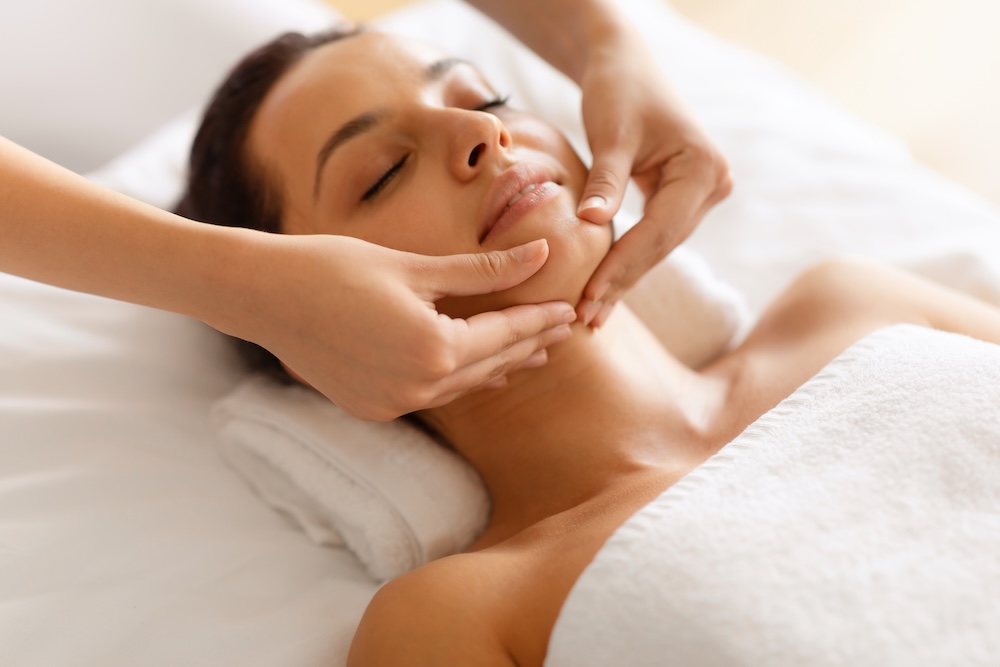
Facial massage offers a wide range of benefits, from improved skin circulation to stress relief. The human touch in facial massage increases dopamine and serotonin, reduces cortisol and promotes both physical and mental wellbeing.
In addition to immediate effects, like enhanced blood flow and lymph drainage, facial massage can generate a biological response in the skin’s fibroblasts, leading to better long-term skin health.
Abi Oleck, an advanced facialist, owner of Beau Skin London and PB Awards 2026 finalist, explains, “The immediate benefits of a facial massage are an increase in blood and lymph circulation, which leaves the skin looking brighter and tighter.
“The serum and oils used for the massage will give the skin a boost in hydration for a youthful, dewy look while also keeping skin nourished and moisturised. Massage also helps relieve neck tension and tension headaches for the client.”
How consistent facial massage improves skin health
Facial massage doesn’t just offer short-term skin benefits; regular treatments can lead to lasting improvements.
“Any skin regime that you do consistently is going to have an effect; it’s like going to the gym,” says celebrity makeup artist and skin expert Nathalie Eleni. “You might have a facial once and feel great, but if you want to have long-term benefits, you need consistency.”
Anna Tsankova, a world champion in facial massage and a PB Awards 2025 finalist, agrees that accumulative results are crucial.
“Regular massage reduces muscle tension in overused areas, like the forehead and around the mouth, while activating ‘lazy’ muscles to improve facial symmetry and function. This combination improves the underlying structures of the face, leading to a more youthful appearance,” she says.
The role of fascia in facial massage
Massage expert and educator Beata Aleksandrowicz emphasises that understanding fascia – the connective tissue network that supports every structure in the body – is key to delivering truly transformative massage results.
“Fascia is the web of connective tissue that envelops all organs in the body, creating a ‘home’ for all structures. Its four main tasks are to provide strength, support, elasticity and cushioning.
“In a healthy state, fascia is relaxed and wavy. It can stretch and move without restriction. Comprised of collagen and elastin fibres anchored within a gel-like matrix, it reduces friction between muscles, allowing them to glide smoothly over each other. This facilitates the transmission of muscular forces and improves efficiency by minimising energy use.”
Aleksandrowicz adds that when fascia becomes restricted, the body compensates in ways that can affect posture, mobility and even emotional wellbeing.
“Every massage will improve fascia to some extent, particularly when the therapist understands its importance. However, in my experience, myofascial release is one of the most effective ways to restore balance.
“It’s a great method to identify and feel fascial restrictions, facilitating change by releasing areas where the fascia is stuck. This isn’t about stretching fascia, but about dissolving barriers within its structure.
Fascia also plays a role in a client’s emotional state. Tension in these tissues can contribute to stress, anxiety and depression.
“As a healer, I believe that true change requires addressing not only the physical but also the emotional, mental and spiritual aspects of fascial restriction. Releasing the fascia is, for me, the first step in restoring balance to the body, and in turn, improving mental wellbeing.”
Aleksandrowicz believes that fascia-focused massage can elevate the client experience: “Educating your client about fascia’s importance, exploring the reasons behind their restrictions, and teaching them how to prevent further limitations is key – especially if we want long-lasting results.
“It can be eye-opening for clients to connect a sedentary lifestyle, poor posture, dehydration, lack of sleep and unhealthy eating with restrictions they feel in their body’s movement or flexibility.
“When clients understand what’s going on in their body or mind, everything changes. They begin to take responsibility, make better choices and become engaged in their wellbeing.
“That kind of engagement doesn’t just benefit the client – it makes our work more meaningful. It’s no longer just about fixing problems; it’s about encouraging real growth and long-term change.”
Long-term benefits of lymphatic drainage in facial massage
Lymphatic drainage is one of the most important techniques in facial massage, promoting a clear, glowing complexion by removing toxins and reducing puffiness.
Oleck emphasises, “By stimulating lymphatic circulation and using a gentle massage technique, you can reduce puffiness, strengthen the immune system, and detoxify the body, all while giving the skin a radiant glow from the inside out.”
How to perform lymphatic drainage in facial massage
Oleck reveals her top tips for lymphatic drainage in facial massage:
- Start with the neck: Always begin by opening the lymphatic system with a gentle butterfly touch, pumping down the neck and across the collarbone to stimulate lymph flow.
- Use light effleurage novements: With soft, full-palm motions, glide upward over the face in an effleurage technique. This is ideal for warming up the skin and improving elasticity.
- Knuckling for deeper muscle stimulation: After the initial warm-up, use your knuckles in upward, circular motions to stimulate deeper layers of skin and muscles.
- Tapotement for a skin glow: Use tapotement (light tapping or slapping motions) with your fingertips to increase circulation. This brings an immediate glow to the skin.
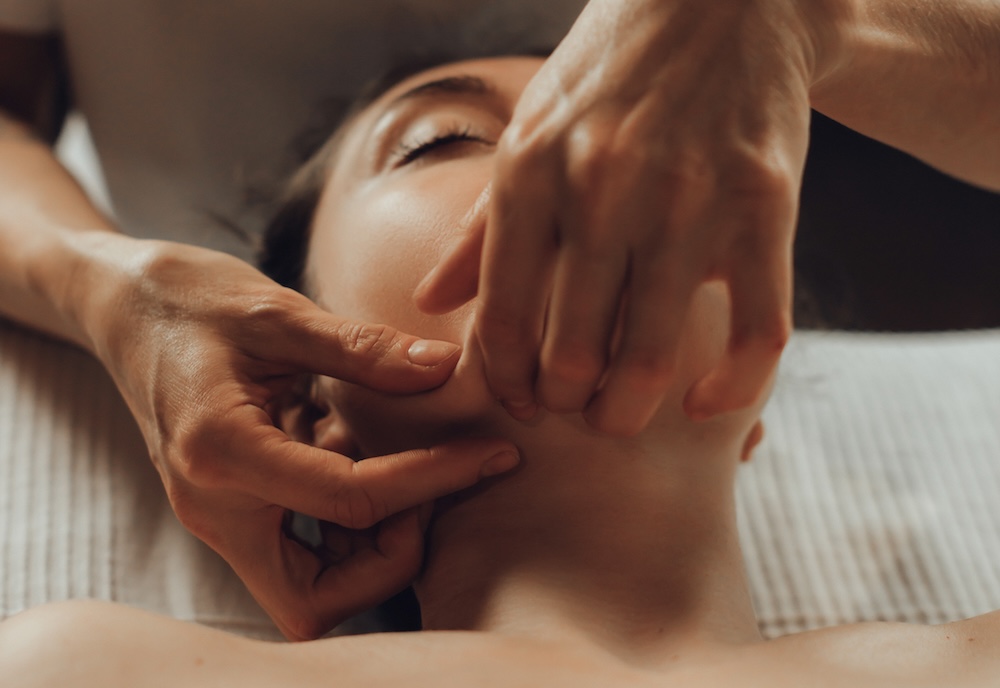
- Pressure points for relaxation: Finish with pressure point techniques on the temples, jawline and forehead to enhance relaxation and relieve muscle tension.
Why facial massage is a celebrity skin secret
Facial massage is a go-to treatment for many celebrities before major events. Its immediate results, combined with minimal downtime, make it a must-have for achieving a radiant complexion.
Oleck shares, “Facial massage is a must-have treatment prior to makeup application. My celebrity clients love combining a lifting facial massage with 0.2mm microneedling, radiofrequency and LED light for maximum results.”
Tsankova also highlights how facial massage can be part of a larger treatment plan: “Red carpet preparation involves a combination of treatments, from sculpting massage and manual lymphatic drainage to using energy devices like radiofrequency and LED therapy.”
Facial massage trends: social media’s role in driving popularity
Facial massage has experienced a resurgence thanks to the power of social media.
Eleni says, “Old-school techniques like lymphatic drainage are seeing a resurgence thanks to social media. Before-and-after images, whether performed by professionals or DIY enthusiasts, showcase the visible improvements, making it accessible to a wider audience.”
Tsankova adds, “This visibility has not only educated a wider audience about the practice but also demystified it, making facial massage more accessible to people outside of professional spa and salon settings.
“Social media content often highlights various techniques and tools, encouraging viewers to try facial massage themselves at home and reaching audiences beyond the treatment room.”
Mastering facial massage techniques for professional results
While clients can perform some facial massage techniques at home, professional beauty therapists have the expertise to deliver the best results.
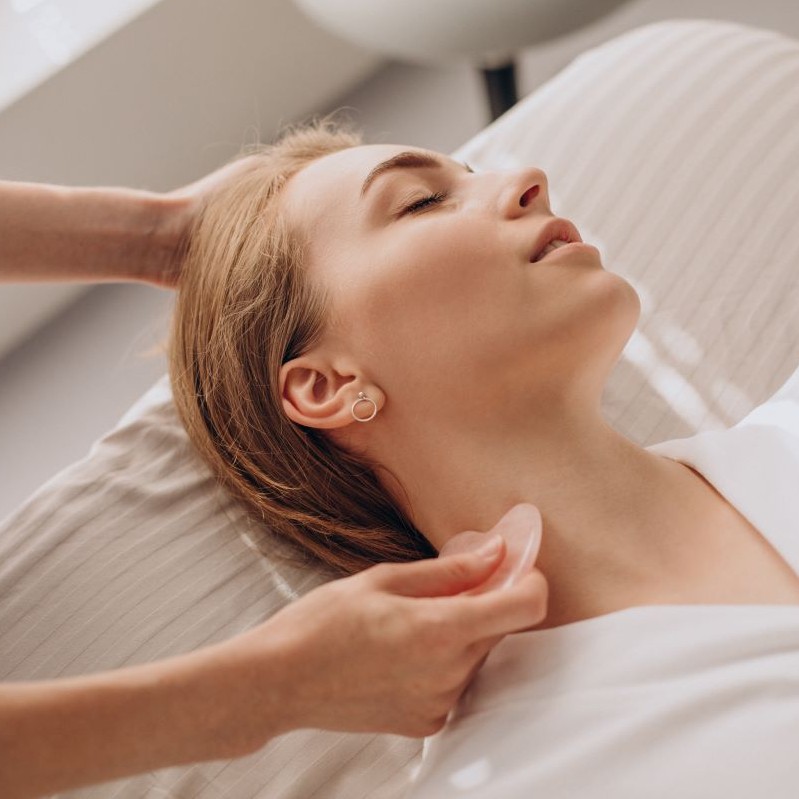
Gua sha stones and jade rollers are popular tools that enhance lymphatic drainage, while manual techniques, such as effleurage, petrissage and tapotement, stimulate circulation and muscle relaxation.
Eleni suggests using oils or a cleansing balm for facial massage, as it enhances the effectiveness of lymphatic drainage and provides a thorough cleanse.
Oleck recommends starting with a hydrating mist followed by an oil-based product for optimal skin hydration and moisture retention. “This water spray and oil technique will help the skin retain moisture and help prevent transepidermal water loss,” she explains.
How to incorporate tools like gua sha and rollers
- Gua sha: Glide the stone in upward motions along the jawline and cheekbones to sculpt the face and improve lymphatic drainage.
- Jade roller: These tools reduce puffiness and promote circulation, especially around the eyes and cheeks. Use them in outward, upward motions for best results.
- Manual techniques: Pair these tools with hands-on techniques such as knuckling, effleurage, and tapotement to maximise the skin’s glow and health.
Facial massage for special events: skin prep tips
When preparing clients for a big event, facial massage is a valuable treatment to include in their skin prep.
If you’re prepping a client for an event, Eleni says it’s usually best to carry out facial massage directly before makeup application.
She adds, “If the client has a sluggish lymphatic system, then a course of treatments leading up to the event would give the best results. If the client tends to go red, then do the massage a few hours before the event.”
You might also like:



Heard some buzz about fortunetigerapp, so I gave it a spin. Solid! Graphics are sharp and the gameplay is smooth. It’s my new go-to! Get started now fortunetigerapp