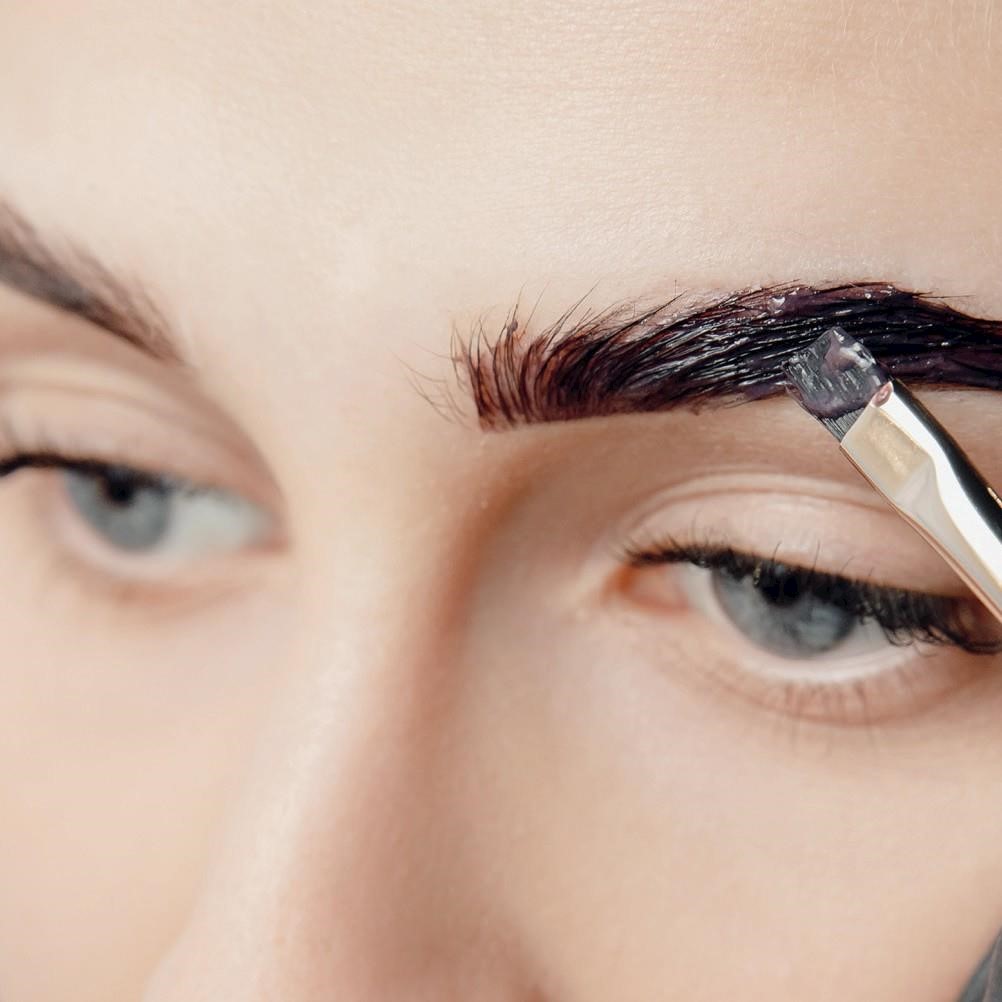
What do allergic reactions to brow and lash tints look like?
Recognising the signs of a tint allergy is key to protecting clients and preventing escalation.
Callaghan says, “If a client is allergic to PPD and has a reaction, symptoms can range from mild to being serious very fast. A mild reaction would present as a stinging or burning sensation, itching and swelling, or a red rash that is often raised which should typically disappear after a few days.
“If a more severe reaction were to happen, this could cause a local blister which could last for several weeks – you would then advise your clients to apply a gentle emollient to this area.”
Wilson adds that while severe cases are rare thanks to patch testing and professional standards, “the client may feel some irritation during the treatment, but this may not be the case in a mild reaction, where they may experience redness, itching, localised swelling, tingling or burning around the lash/brow line that develops within hours to a few days.”
She stresses that beauty therapists are trained to recognise more serious symptoms: “Severe reactions may show rapid swelling of eyelids/face, intense pain, blistering, difficulty breathing, systemic symptoms (hives, faintness) – these are medical emergencies (anaphylaxis, possibly) and require immediate medical attention, this is why patch testing is advised and this occurrence is not so common.”
The importance of patch testing
Patch testing remains the most effective way to reduce the risk of an allergic reaction.
Callaghan explains, “A patch test is a safety precaution that should always be taken seriously to protect yourself, your business and your client. This allows you to check for adverse reactions before trying something new. This precaution should always be done 48 hours prior to the procedure.”
Wilson agrees, “Always follow the manufacturer’s instructions. Apply a small amount behind the ear or on the inner forearm, cover if instructed, and observe for at least 24-48 hours for any reaction. If the client experiences burning, itching, redness or swelling, they should remove the product with a cool, damp pad and inform their therapist they had a reaction.”
However, she cautions that patch tests aren’t foolproof. “Patch tests reduce risk but are not 100% predictive. False negatives occur (a test site may not react, but sensitive facial/ocular skin might), and prior sensitisation can produce rapid, severe responses despite a negative test.
“Always follow additional safeguards – keep product off eyelid skin, use protective barriers, and have emergency procedures ready. Things like eye wash in the first aid kit are good practice.”
How to educate clients about tint allergies
Good communication and documentation are key to salon safety and compliance.
“Explain risks clearly at booking and again before treatment,” says Wilson. “Provide verbal and written information about patch tests, possible reactions, and aftercare.
“Complete clear and concise client consultation and record client consent and patch test outcomes in their record. Emphasise that previous tolerance does not guarantee future safety.”
Aftercare and what to do if a reaction occurs
For mild irritation, Wilson advises, “Remove the product immediately with water, advise cool compresses, and suggest over-the-counter soothing measures (e.g., preservative-free ocular lubricants for the eye area, if recommended by a pharmacist).
“If there is persistent irritation, swelling, blistering or any sign of systemic involvement, refer to emergency or dermatology care. Keep records, photograph the reaction if the client consents, and report the event to the manufacturer.”
She adds, “For severe reactions (anaphylaxis, breathing difficulty, ocular injury), call emergency services immediately. These measures are commonly taught in beauty therapy training, and it is good to refresh your knowledge and training from time to time.”
Staying compliant and up to date
As the beauty industry evolves, so do regulations. Wilson advises, “Cosmetic and professional product rules evolve; stay updated with regional cosmetics regulations and manufacturer safety guidance.
“Routinely review SDSs and manufacturer patch test protocols. It may be an idea to check in with your insurance provider to see if they require any additional steps to ensure you are covered.”
The takeaway
Allergic reactions to brow and lash tints are rare when professionals follow safety procedures and client care protocols.
By understanding key allergens such as PPD, conducting thorough patch testing, and maintaining transparent client communication, brow techs and lash artists can ensure tinting services remain safe, compliant and confidence-boosting for every client.
You might also like:



Downloaded cashtornadoapp on my phone and gave it a whirl. It’s definitely one of the slicker apps I have seen. Give it a try! cashtornadoapp